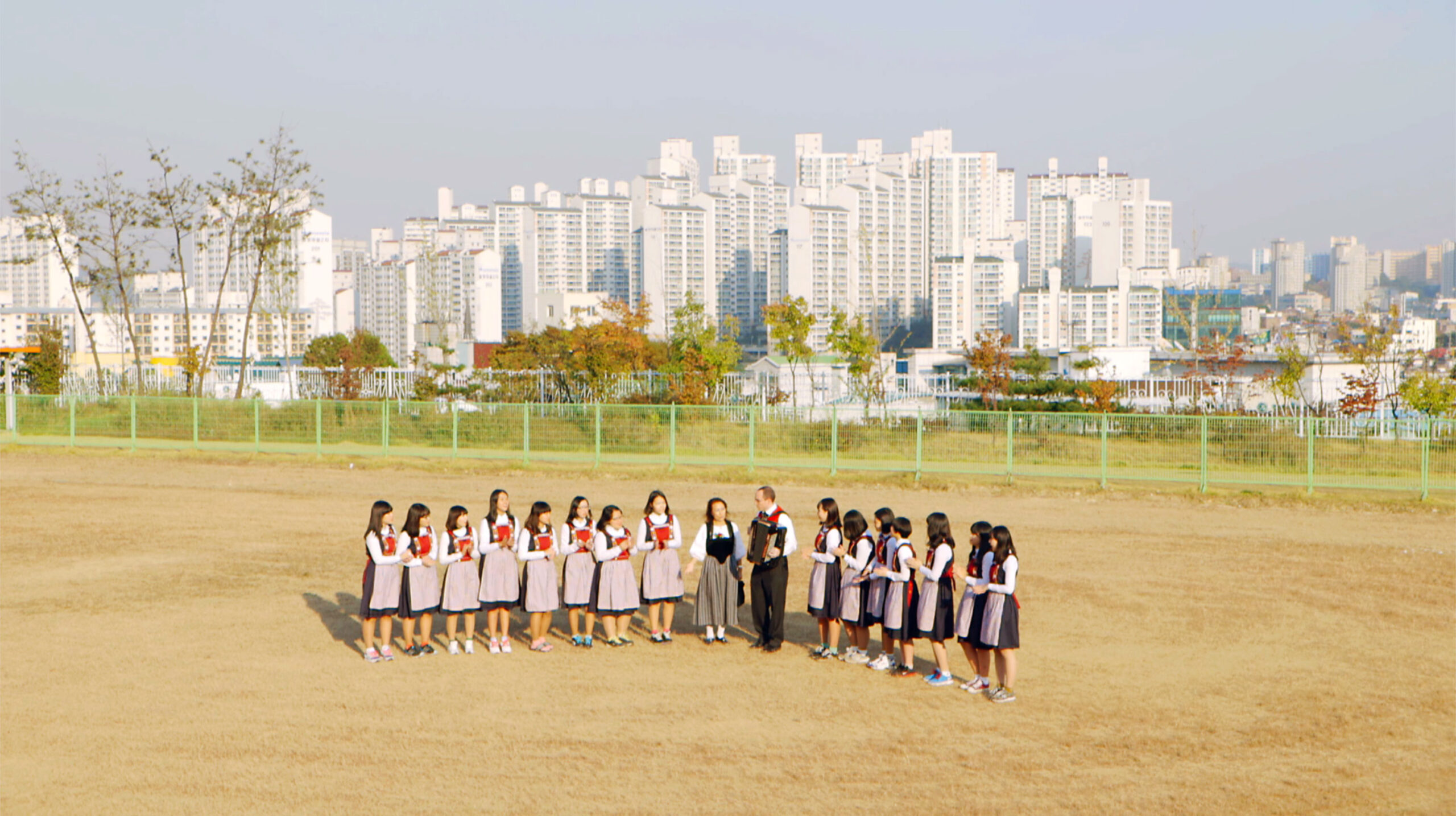
Working on JODELEHI in Korea
I worked as the director of photography on the Korean segment of JODELEHI, a feature documentary directed by Risa Chiappori. Based in Seoul, I shot the Korean part of the film and collaborated closely with the director to visually translate this chapter of a larger international story.
At the time, JODELEHI was in production, with a planned release in the summer of 2014. The Korean segment forms one part of a documentary that moves between cultures, places, and generations.
A Story Rooted in Cultural Integration
JODELEHI follows the life of a South Korean woman who spent more than thirty years in Switzerland. During that time, she integrated deeply into Swiss society through yodelling, an art form far removed from her place of origin.
The film approaches this story from a personal angle. Directed by her daughter, it reflects on how cultural belonging can grow quietly over time, while also touching on the tension that can exist when such connections are not fully acknowledged.
Filming the Korean Chapter
My role focused on capturing the Korean side of this story. Rather than illustrating ideas directly, I concentrated on atmosphere, rhythm, and small details. These elements help reflect the emotional distance and connection that shape the protagonist’s experience.
The cinematography stays restrained by choice. It allows space for observation and avoids visual emphasis where it is not needed.
A Shared Cinematic Approach
While I filmed in Korea, the Swiss part of JODELEHI was shot by Steff Bossert. This division of work allowed each part of the film to be shaped from within its own cultural context.
Despite different locations and crews, the goal remained the same. The images needed to support one continuous story rather than stand out as separate parts.
Risa Chiappori’s Personal Perspective
Risa Chiappori brings a deeply personal perspective to JODELEHI. Born in Seoul and later raised in Switzerland, she approaches the film with both distance and closeness. Her background in film and art history, along with her work as a filmmaker and lecturer, informs the careful structure of the documentary.
That personal connection shapes the tone of the film. It remains reflective rather than explanatory and allows contradictions to exist without resolution.
A Film Between Cultures
JODELEHI brings together Korean and Swiss perspectives through a single, unexpected medium. Yodelling becomes less a subject in itself and more a thread connecting identity, memory, and place.
Being part of this project meant contributing to a film that values observation over statement. It remains a quiet exploration of how culture can travel, settle, and reshape a life over time.