Last Letters on Short of the Week
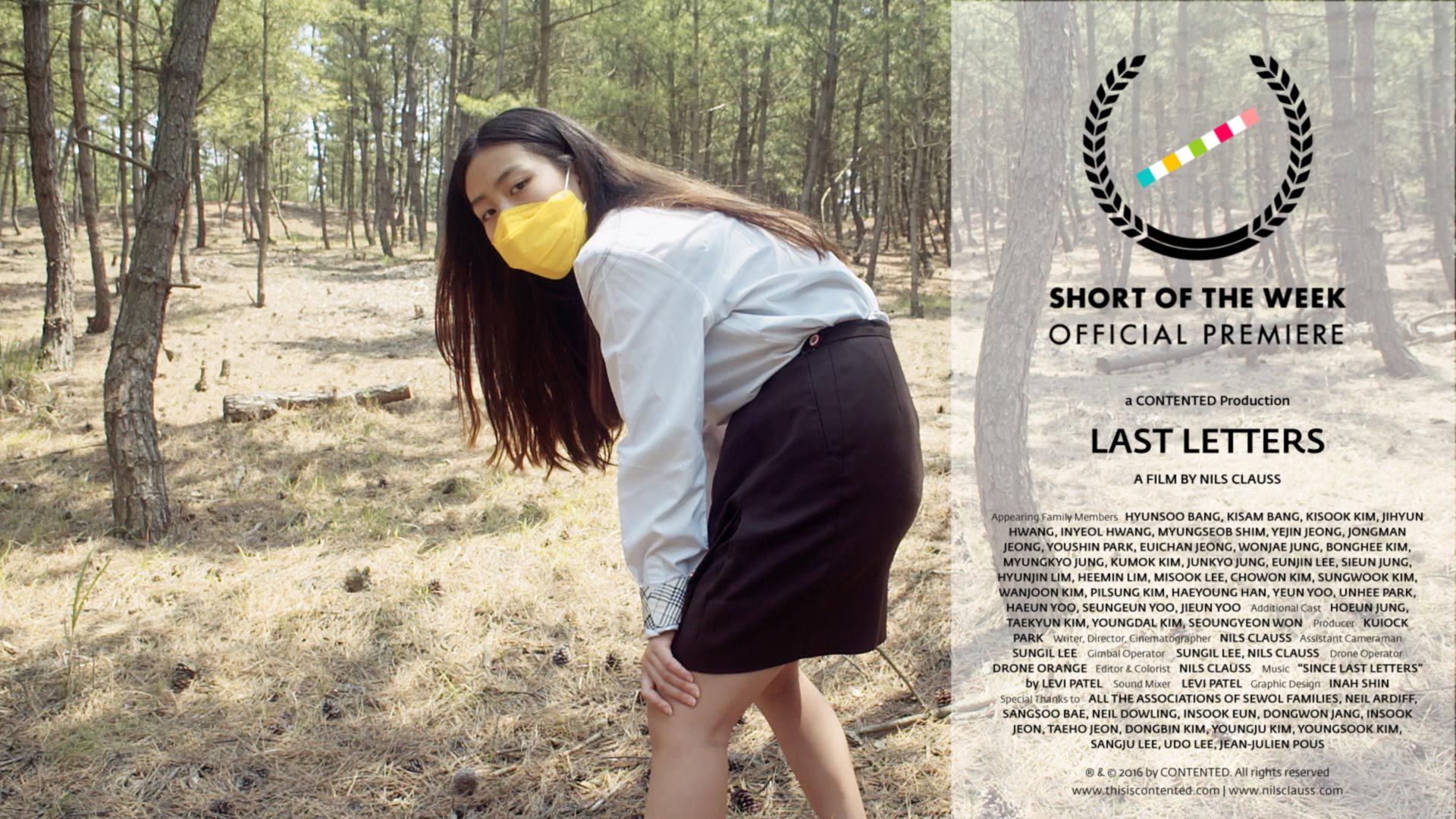
LAST LETTERS was recently featured on SHORT OF THE WEEK, a platform that has supported and curated short films from around the world since 2007. Being included there means a great deal to me. Short of the Week focuses on films that take risks in form and subject, and I appreciate the care they bring to contextualizing each work.
Alongside the film, Jason Sondhi wrote a thoughtful review that sits just below the screening. His text offered a perspective that felt attentive and fair, and I’m grateful for the time he spent engaging with the film on its own terms.
Where the Project Began
The starting point for Last Letters was a conversation with musician Levi Patel. He approached me with the idea of working together on an audio-visual project. From the beginning, we agreed that we didn’t want to make a conventional music video. Instead, we were interested in a space somewhere between documentary and fiction.
That approach grew out of earlier collaborations and experiments, including Urban Island. Those projects helped shape a shared language and trust, which made it possible to move into more sensitive territory with care.
From Bikini Words to Last Letters
Last Letters grew out of a longer process. Before this film, I worked on Bikini Words, which explored language formed during Korea’s industrialization. That project became the starting point for a loose trilogy focused on Korea, space, and memory.
As I continued working, it felt unavoidable to address the Sewol ferry tragedy. It was, and still is, a defining moment in recent Korean history. Yet outside Korea, it often receives little attention.
Approaching the Sewol Tragedy
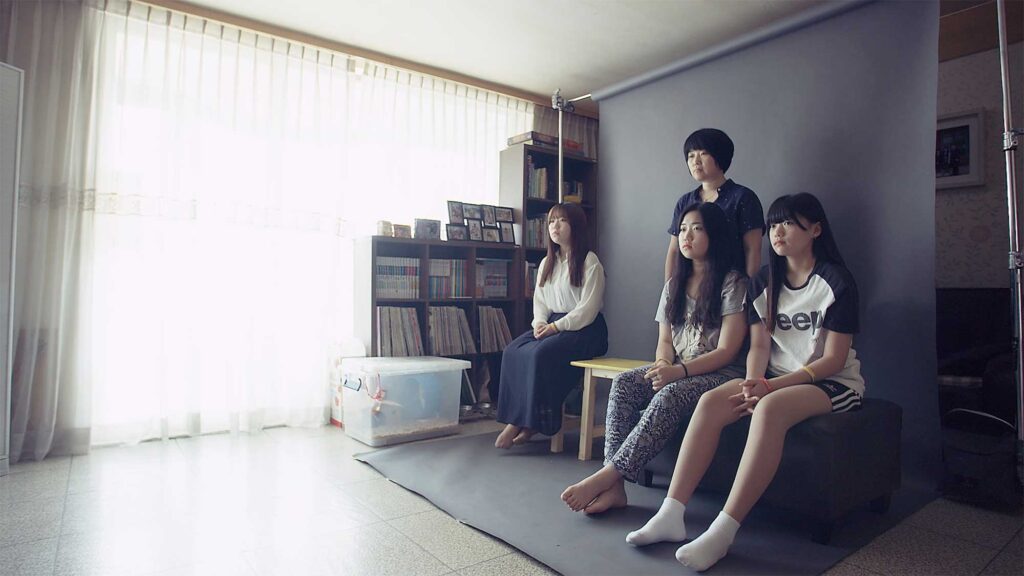
Last Letters does not try to explain what happened on April 16, 2014. Instead, it looks at what followed. Many families felt abandoned and unheard. Some turned to activism, organizing protests and demanding accountability.
I wanted to focus on the emotional and physical spaces left behind rather than on investigation or accusation. That choice was deliberate. It allowed the film to sit outside traditional journalism and avoid simplifying an experience that remains unresolved.
Working With the Families
Gaining access to the families required time and patience. Trust was essential. I spent a long period speaking with different groups and representatives before any filming took place. Every conversation carried emotional weight, and I tried to move carefully.
The goal was never to extract emotion or dramatize grief. I wanted to listen and to observe. The film reflects that restraint and the responsibility that comes with telling stories rooted in real loss.
The Role of Music
Levi Patel’s music plays a quiet but central role in Last Letters. We were careful not to let the score guide emotion too strongly. Instead, the music sits alongside the images, creating space rather than direction.
That balance helped the film move between documentary and more abstract moments. It allowed the families’ presence to remain at the center, without being overshadowed.
Why I Made This Film
At its core, Last Letters follows the same principle that guides most of my work: people come first. The film reflects a struggle that feels deeply uneven, where individuals face institutions far larger than themselves.
I wanted to create something that could travel beyond Korea while staying rooted in its context. Being featured on Short of the Week helps that conversation continue.
Looking Ahead
After completing LAST LETTERS, I wrapped a feature documentary titled THIS ISLAND IS OURS, which looks at territorial claims between Korea and Japan. I also completed PLASTIC GIRLS, the final part of a Korea-related trilogy that explores space, memory, and public imagery.
Last Letters remains a very personal project. It exists as a small gesture of attention and respect. I hope it continues to be seen in that spirit.