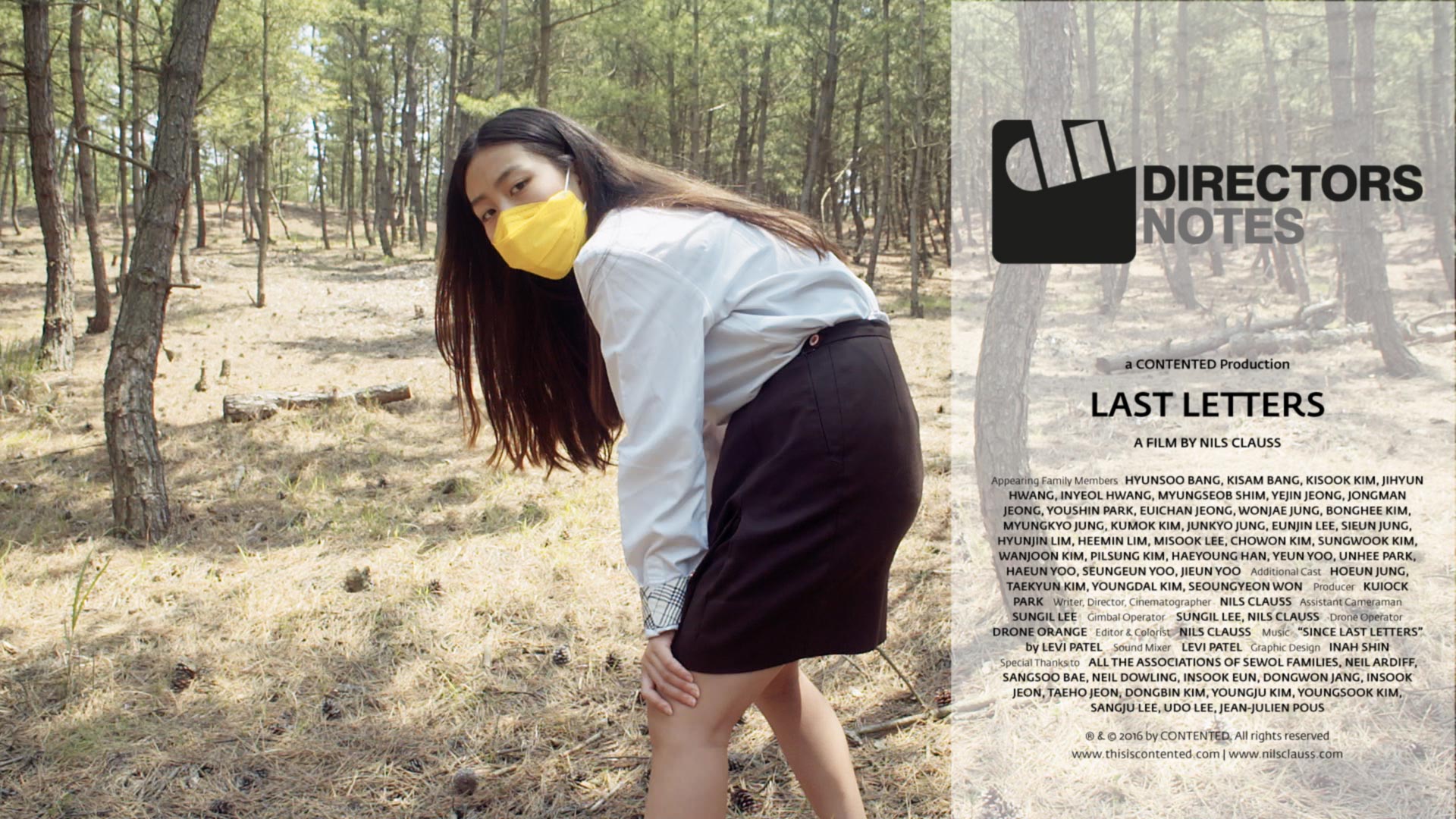
Last Letters on Directors Notes
Directors Notes recently featured Last Letters, and I was invited to speak about the film and the process behind it. The article looks closely at how the project came together and why I chose to approach the Sewol ferry tragedy in a quieter, more reflective way.
It was important to me that this conversation focused on intention rather than spectacle. Directors Notes created the space for that.
Where the Film Comes From
LAST LETTERS grew out of earlier work where I explored the space between documentary and fiction. Urban Island and Bikini Words both shaped how I think about storytelling. In different ways, they deal with memory, absence, and places that hold meaning long after people leave.
With Last Letters, I wanted to continue that line of thinking. The film does not aim to explain the Sewol tragedy. Instead, it stays with what remains after the event.
Approaching the Sewol Tragedy
When I started working on Last Letters, three years had passed since the ferry sank. The public conversation had moved on, but for the families, nothing had ended.
The film follows eight families who lost someone that day. Rather than focusing on investigation or blame, I chose to look at the spaces they live in now. These rooms hold memory, silence, and unresolved questions.
Working With Music
Music plays a central role in my work, and Last Letters was no exception. Composer Levi Patel and I worked closely to find the right tone.
His piece SINCE LAST LETTERS does not push emotion. It stays restrained and leaves room for the families’ voices. That balance mattered to both of us.
Filming With Care
Gaining trust took time. I spoke with different family representatives before filming anything. It was important that no one felt pressured or exposed.
I tried to approach each conversation with care. The film avoids close-ups of grief and instead stays with everyday details. My hope was to create something that felt respectful and honest.
Why Directors Notes Matters
The Directors Notes feature allowed me to speak openly about these choices. It framed Last Letters not as a statement, but as a gesture.
For me, filmmaking often begins with listening. Last Letters is part of that ongoing effort to slow down, look carefully, and stay with difficult questions rather than rushing to answers.