Plastic Girls as the Final Chapter of My Korea Trilogy
Plastic Girls is the final film in my Korea-based trilogy, following BIKINI WORDS and LAST LETTERS. While each film stands on its own, they share a common interest in space, society, and lived experience. Plastic Girls focuses on gender and the way public space reflects social values.
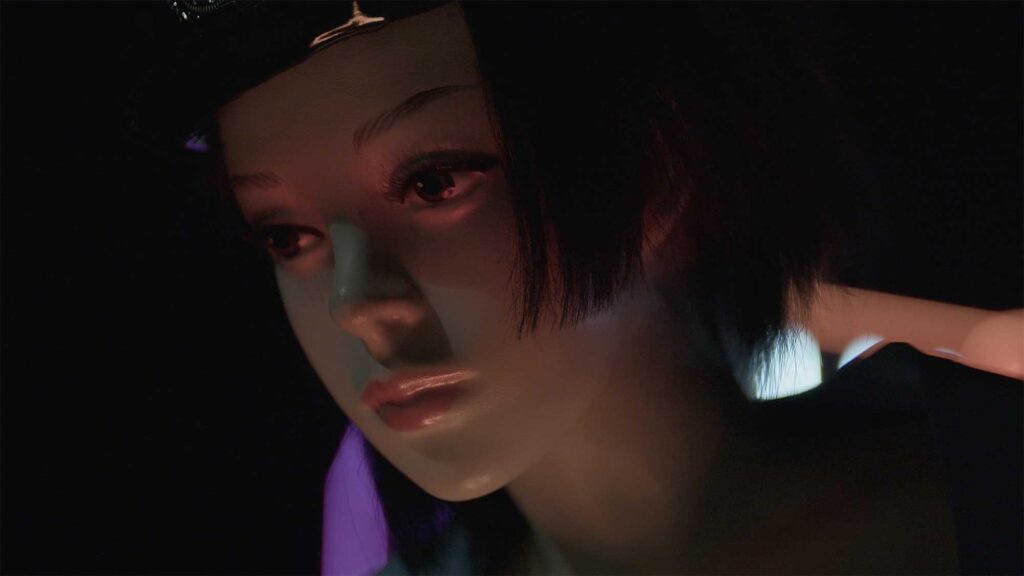
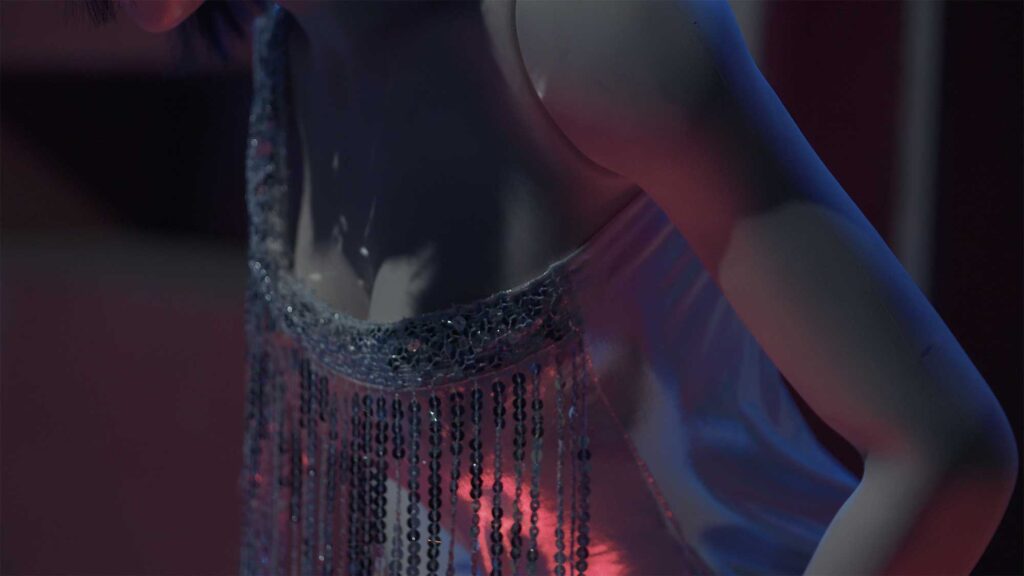
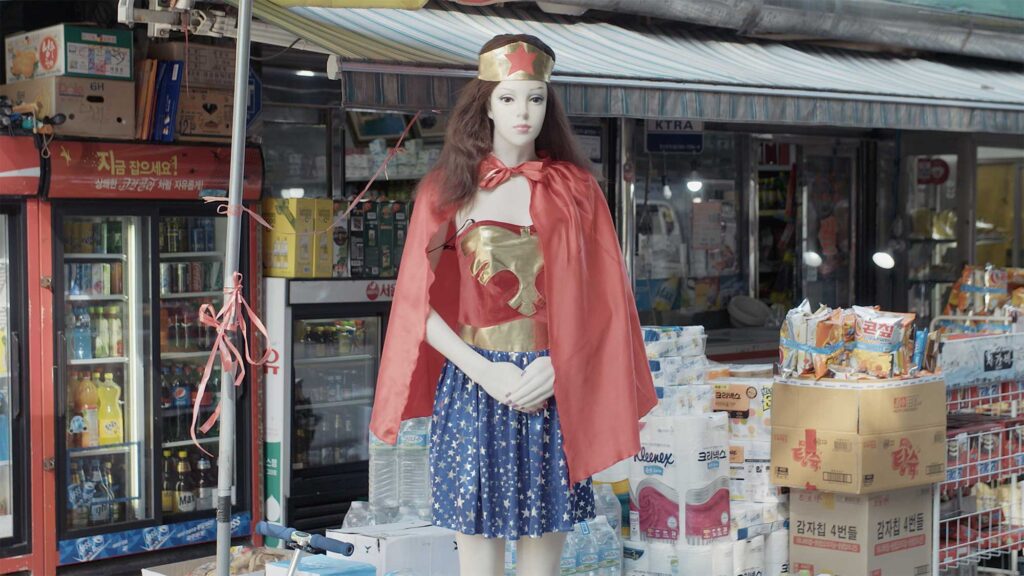
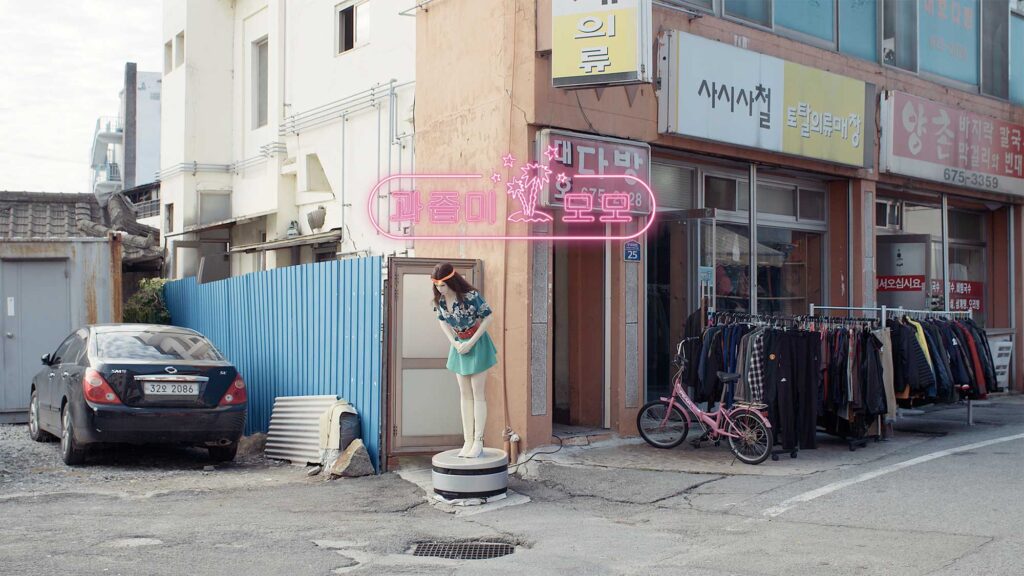
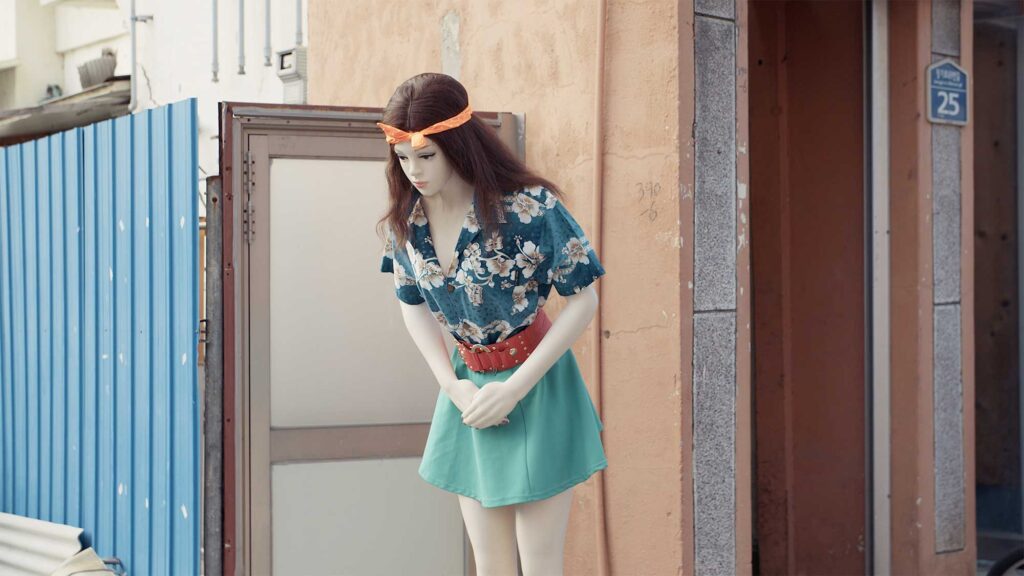
The film looks at plastic mannequins placed in everyday urban settings. Through them, it examines how bodies, especially female bodies, are presented and consumed in public space.
Gender and Public Space Beyond Korea
Since moving to South Korea in 2005, questions around gender equality became part of my daily observations. These experiences shaped the starting point for Plastic Girls.
Although the film is rooted in Korea, its subject is not limited to one country. The sexualization of public space is a global issue. By using mannequins instead of people, the film creates distance and discomfort. That distance allows space for reflection beyond cultural borders.
How Plastic Girls Began
The project started in 2015 after designer Hyun Cho approached me about a book project. This collaboration led to the Plastic Welcomer photo series. While working on the photographs, the mannequins began to feel almost human. That shift pushed the project toward moving images. Plastic Girls grew directly out of that transition.
Concept and Direction
Plastic Girls completes my Korea trilogy by connecting gender questions with architectural thinking. Like the earlier films, it reflects my interest in space and how people move through it.
Composer Udo Lee played an important role in shaping the film’s tone. The music allowed the film to go deeper and move away from a purely observational approach.
Scripted Voices and Character Building
Unlike my earlier documentaries, Plastic Girls required scripted interviews. This process helped define the mannequins as characters shaped by social pressure and beauty standards.
These characters reflect issues that are visible in the entertainment and fashion industries. They also point toward broader expectations placed on women in public life.
The Role of Music in the Film
Music has always been central to my work. In Plastic Girls, Udo Lee composed original music that supports the film’s slightly unsettling tone. Sound and image work together to guide the viewer. The music never explains the images, but it adds another emotional layer to them.
Process and Challenges
Plastic Girls follows my usual approach of putting people, or in this case human ideas, at the center of the story. At the same time, it reconnects with my background in architecture photography.
The project changed during production. Some challenges forced us to adjust the structure and rhythm of the film. Those shifts became part of its final form.
Looking Ahead
Alongside Plastic Girls, I continue to work on projects that combine social themes with strong visual concepts. I’m currently involved in the opening film for the UIA World Architects Congress.
As a director of photography, I’m also working on a project about the lives of North Koreans living in South Korea. Through CONTENTED , I remain interested in developing films that take unexpected angles and invite reflection rather than simple answers.