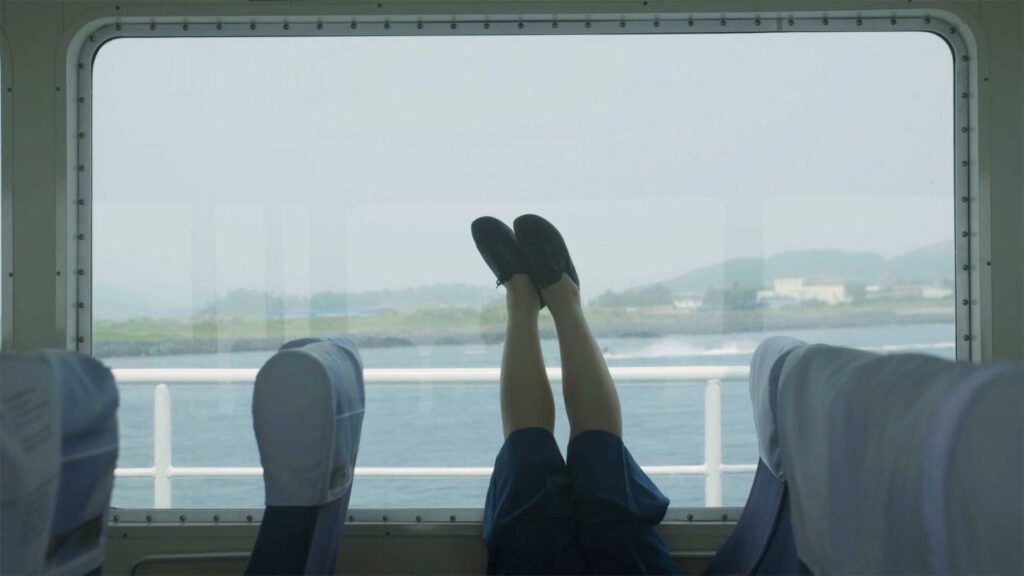
Filming a North Korean Defector’s Story for The Washington Post
I had the opportunity to work on a short film commissioned by The Washington Post that follows the story of Eun-jeong Oh, a North Korean defector now living in Seoul. The film looks at how she navigates memory, loss, and identity through literature and poetry. It became a quiet portrait of how language can offer both refuge and distance.
My Hometown Means the Sea
The film is titled MY HOMETOWN MEANS THE SEA: A NORTH KOREAN DEFECTOR’S POEM. It forms part of journalist Anna Fifield’s broader reporting on North Korean defectors building new lives in Seoul. Rather than focusing on escape alone, the film stays close to Eun-jeong’s inner world and the role writing plays in shaping it.
Growing Up by the Sea
In an interview with Anna Fifield, Eun-jeong speaks about her early relationship with books. In North Korea, she had access to just one novel, borrowed from a neighbor and read again and again. After arriving in Seoul, that world expanded quickly. She enrolled in college and encountered Korean literature in a new way, guided by a professor who encouraged her curiosity. That exposure opened a door she hadn’t known existed.
Poetry as a Way to Speak
Her first poem emerged unexpectedly. Seeing a maple tree on campus brought back memories of her sister, and the emotion found its way onto the page. Writing became a way to process experiences she had never spoken about openly. Her first poetry book, Calling Home, was published in 2015.
Much of her work reflects on North Korea. She speaks about the place with complexity, acknowledging both oppression and moments of happiness. The poems don’t deny the past. They hold it.
Making the Film
The film came together through close collaboration. Min Joo Kim, Joyce Lee, and Jesse Mesner-Hage led production. UDO LEE recorded sound, and Erin Patrick O’Connor handled editing and color grading. Music came from APM MUSIC and plays a subtle role throughout the film.
My role was to help shape a visual language that stayed respectful and restrained, allowing Eun-jeong’s words to lead.
Closing Thoughts
I’m grateful to everyone involved in bringing this film to life, and especially to Eun-jeong for trusting us with her story. My Hometown Means the Sea is not about explaining North Korea. It’s about listening to one person reflect on home, memory, and how language can carry what cannot be said directly.