Bikini Words and the VICE Creators Project
Bikini Words was featured through the VICE CREATORS PROJECTS, which provided an important context for the film. The project looks at language shaped by factory work in South Korea during the 1970s and 80s. For me, the focus was never on technology as a subject. Instead, it was on how words emerge from physical labor and shared experience.
The Creators Project Context
The Creators Project grew out of a collaboration between Intel and VICE. It supports artists working across film, music, design, and digital culture. Rather than functioning as a short-term campaign, the platform has developed into an archive of ongoing work. That long-term view aligns well with projects that sit between research and observation.
How Bikini Words Fit In
Bikini Words became part of this platform because it uses film as a way to think about systems rather than events. The film does not explain industrial history directly. It stays with language and the people who used it. Being shown alongside other artist-led projects helped frame the film as a contribution rather than a statement.
Commission and Starting Point
The film originally came from a commission by Geumcheon District Office. The initial conversations involved Design Studio Kerb and Urban Intensity Architects, who were developing a long-term exhibition at Gasan Digital Complex. My task was to create a moving-image work that could sit inside that exhibition without repeating what text or architecture already explained.
The G-Index as Structure
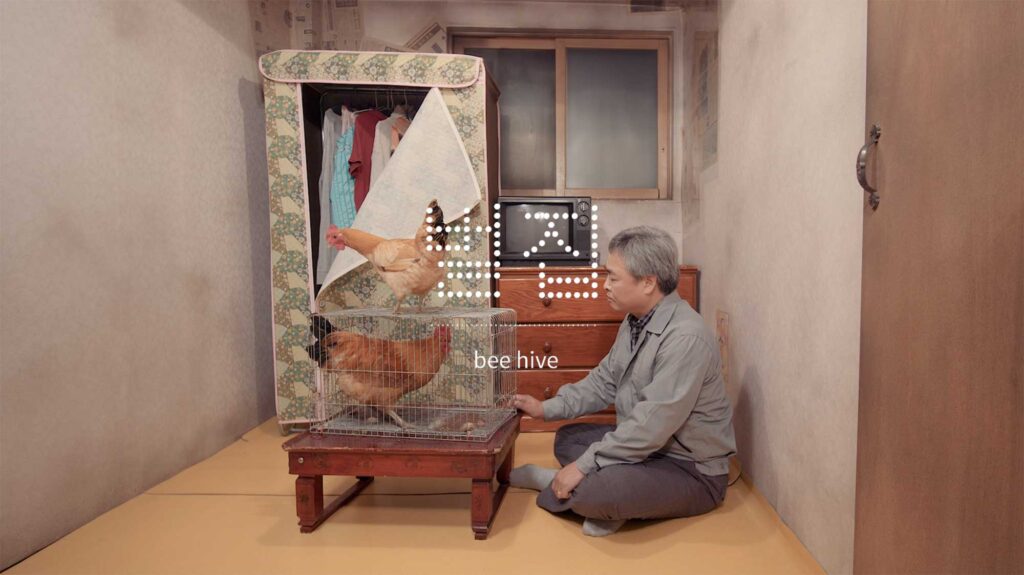
During research, I came across the G-Index, a collection of 99 words documented by researcher Haeyeon Yoo. Factory workers in G-Valley used these terms to describe their daily reality. Together with producer Kuiock Park, I selected eight words. Each one became a scene. The structure of the film grew directly from that choice.
Spaces, Real and Reconstructed
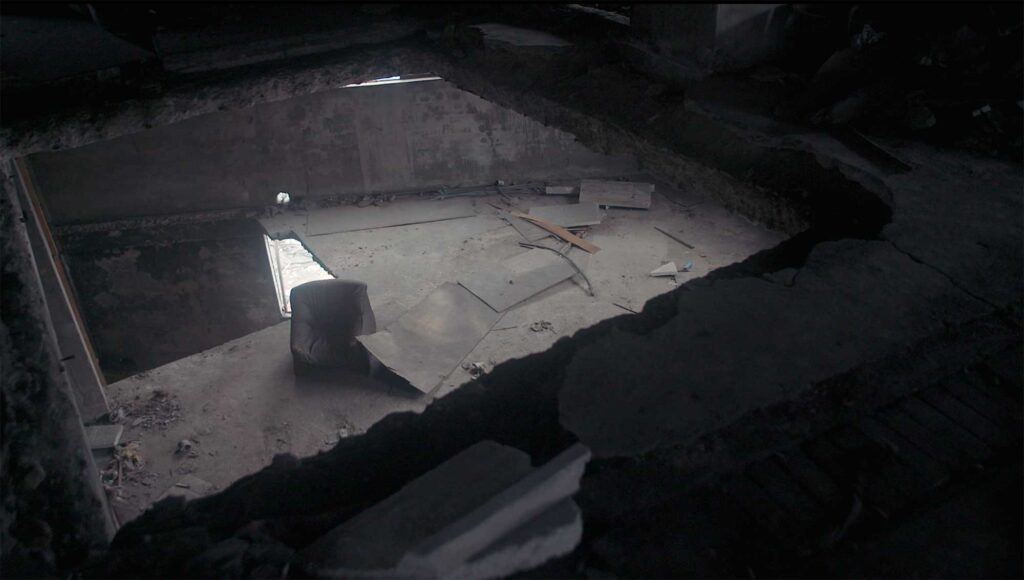
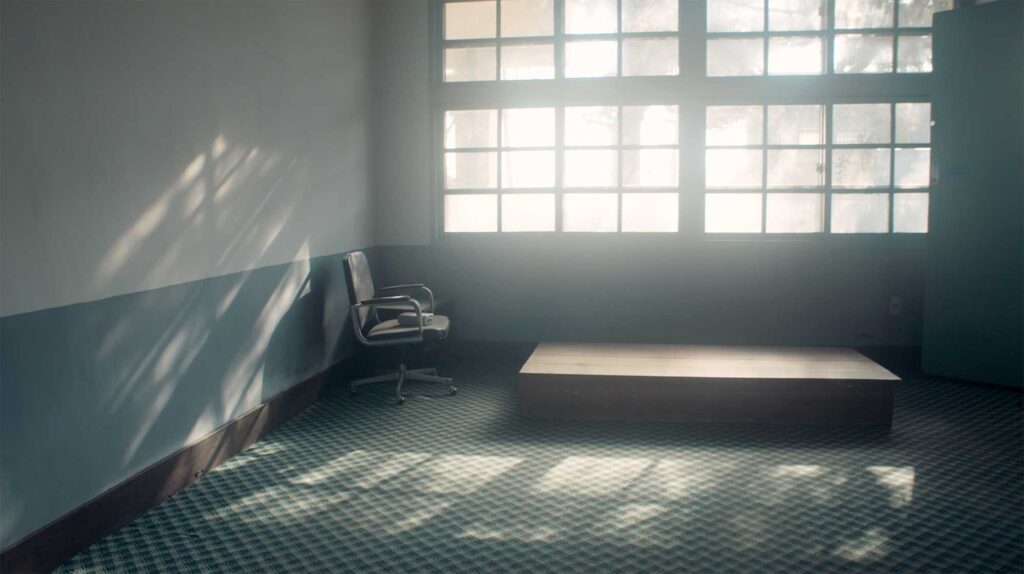
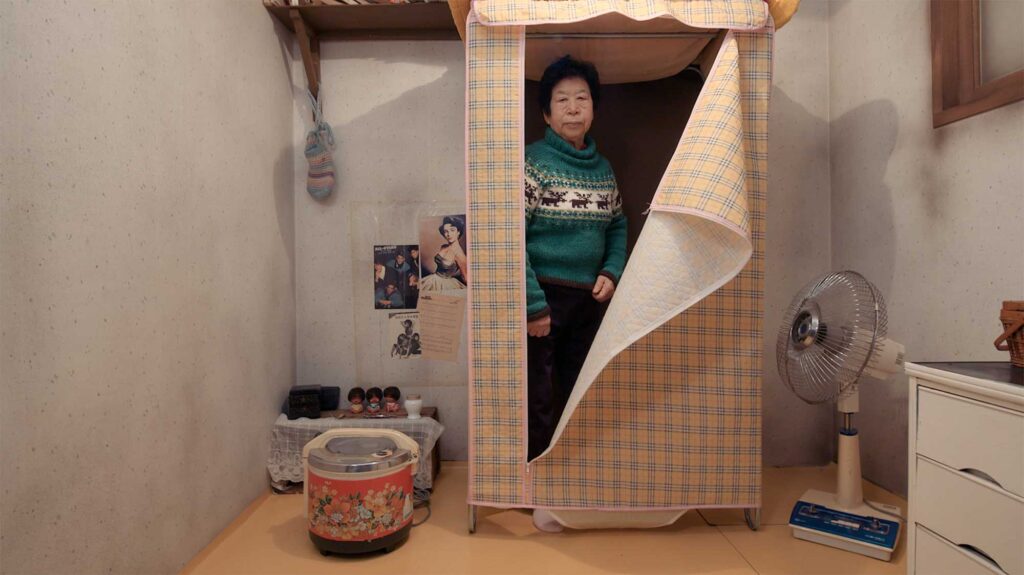
We filmed in two types of locations. One was the exhibition space, where environments were carefully rebuilt. The other consisted of real places in Geumcheon that are slowly disappearing. Moving between these spaces allowed the film to shift in tone. One feels controlled. The other carries absence.
Visual Decisions
In the exhibition space, the framing is more graphic and fixed. In real locations, the camera floats and drifts. I avoided filling every frame with people. That absence invites the viewer to imagine what once happened there.
Why This Collaboration Mattered
Bikini Words only works because former factory workers agreed to participate and trusted the process. Their presence brings moments of humor and restraint into a subject that could easily become heavy. I’m grateful to everyone who contributed time, memory, and patience. The film exists because of that shared effort.